People ask “how much does Shenzhen cost?” and want a single number. There isn’t one. There are three numbers, depending on whether you want a frugal life, a comfortable one, or one that looks like the brochure. Here they are, with the line items behind them.
30-second answer
- Frugal solo, ¥7,500/mo (~US$1,040). Sharing or far-out studio, local food, metro, no imported anything. Achievable, not glamorous.
- Comfortable solo or couple, ¥16,500/mo (~US$2,290). Decent 1BR in a good district, mix of local and Western food, occasional DiDi, gym, international SIM, a few small luxuries.
- Family or lavish, ¥45,000/mo (~US$6,250). 3BR in Shekou or Futian, household help, private healthcare, regular international travel, premium everything. International school is on top of this.
Most working expats and founders we know land between ¥14,000 and ¥22,000 per month per person, all-in.
How to read this
All numbers are May 2026, in Chinese yuan (¥, RMB) with US dollar conversions in parentheses at ¥7.2 = US$1. Everything is rounded to the nearest ¥100. These are real numbers from real ledgers (ours, our clients’, and a small panel of long-term residents we cross-check with twice a year), not government statistics or expat-forum guesses.
A few things that are not in here:
- Tax. Shenzhen income tax depends on your employer structure and whether you qualify for the foreign-talent deductions; budget separately.
- One-off setup costs. First-month cash is on its own page.
- International travel home. Add to the lavish tier if you fly business; it dwarfs everything else if you do.
- Tuition. International school fees are large enough to warrant their own line; see the schools section.
The full breakdown
| Line item | Frugal ¥ | Comfortable ¥ | Lavish ¥ | Notes |
|---|---|---|---|---|
| Rent | 4,500 | 12,000 | 35,000 | Largest single line; see district table below |
| Utilities (elec/water/gas) | 150 | 350 | 700 | Summer AC pushes lavish-tier electricity to ¥900+ in July/August |
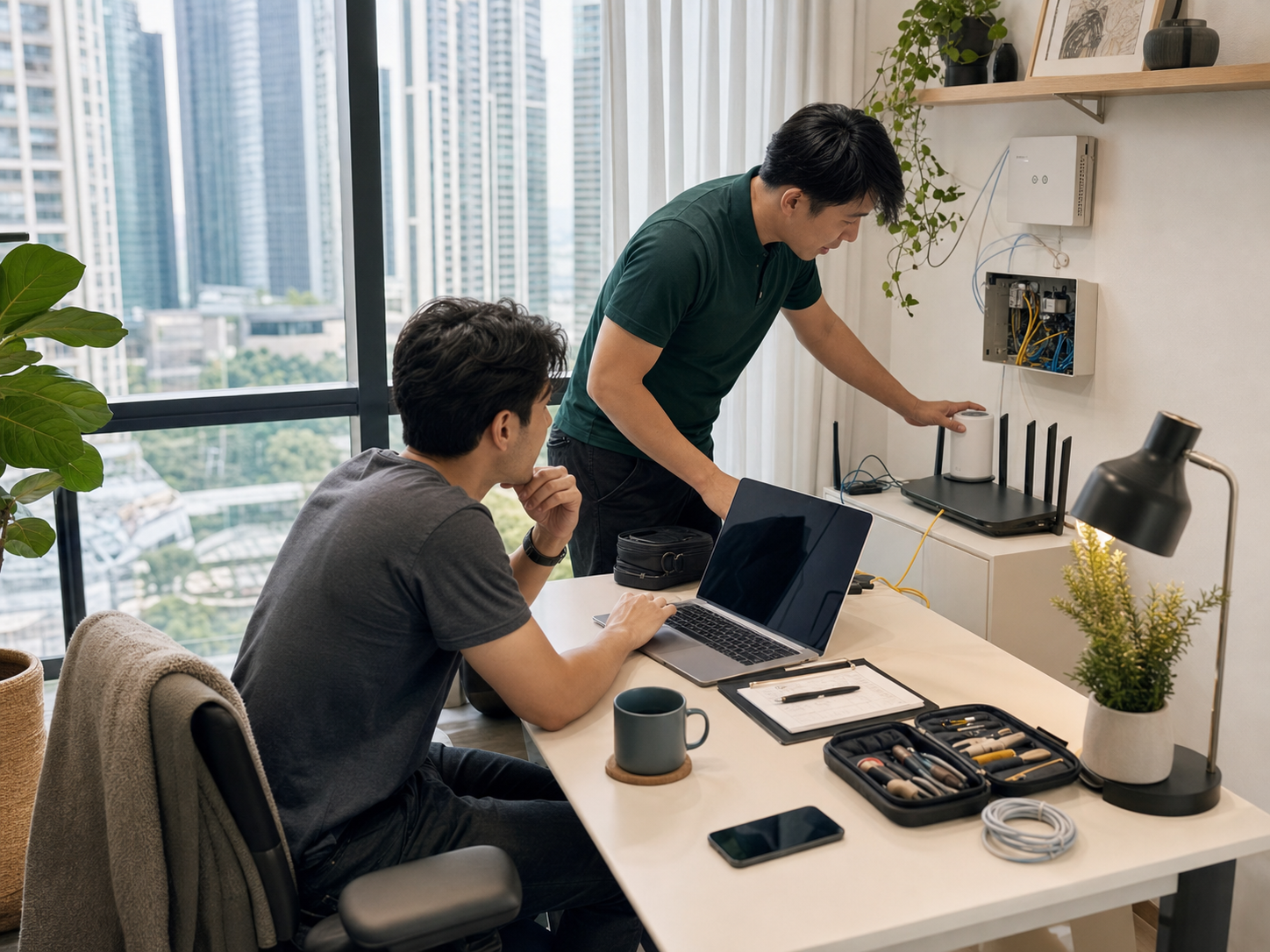
| Internet | 100 | 150 | 200 | Lavish includes enterprise home network with dual-WAN and mobile failover for reliable work calls |
| Mobile | 50 | 100 | 200 | China Mobile/Unicom basic vs. high-data plan; add ¥100/mo for an international roaming SIM |
| Groceries | 1,200 | 3,000 | 6,000 | Local market vs. mixed vs. mostly imported (City’super, Ole’) |
| Eating out + delivery | 1,300 | 4,000 | 6,000 | Meituan + restaurant meals; lavish tier eats out 5+ nights/wk |
| Coffee | 150 | 600 | 1,200 | Luckin/Manner vs. Seesaw/% Arabica vs. daily flat whites at Western cafés |
| Transport | 200 | 800 | 4,000 | Metro only vs. metro + DiDi vs. owned car or daily DiDi Premier |
| Health / gym | 0 | 400 | 1,500 | Park workouts vs. ChinaFit vs. Pure Fitness / boutique studios |
| Healthcare | 0 | 300 | 3,500 | Public clinic vs. occasional private GP vs. United Family / Raffles |
| Personal care | 50 | 300 | 1,200 | Haircut, skincare, occasional spa |
| Entertainment | 300 | 1,200 | 3,500 | Bars, concerts, weekend trips |
| Travel buffer | 0 | 1,000 | 5,000 | Long weekend in HK/Sanya vs. monthly international flight |
| Misc | 500 | 1,000 | 2,000 | The “I forgot about that” line. Always non-zero. |
| TOTAL | ¥7,500 | ¥16,500 | ¥45,000 | ~US$1,040 / US$2,290 / US$6,250 |
The Lavish column assumes a single person or a couple, not a family with children in international school. Add ¥18,000–28,000 per child per month for school, and another ¥8,000–15,000/month for a family-sized apartment upgrade and household help.
Rent
Rent is the single biggest variable. Same standard apartment can cost twice as much one metro stop away. Indicative monthly rents for a normal mid-range building (not the cheapest village housing, not the top-floor penthouse):
| District | Typical unit | Rent range ¥/mo |
|---|---|---|
| Shekou (Nanshan, west) | 1BR | 7,500 – 14,000 |
| Nanshan tech park (科技园) | 1BR | 6,500 – 11,000 |
| Futian CBD | 1BR | 7,000 – 12,500 |
| Bao’an (Xixiang, Bao’an centre) | 2BR | 5,000 – 9,000 |
| Longhua (around Line 4) | 2BR | 4,000 – 7,500 |
Up-front cash. Standard terms are 押二付一, two months deposit, one month rent in advance, plus a half-month rent as the agent fee. For a ¥10,000/month apartment that’s ¥35,000 (US$4,860) before you turn the key. Some serviced apartments quote inclusive of one month rent + one month deposit; some private landlords will negotiate to one + one if you sign a longer lease. Always negotiate.
What moves the price. New construction commands a 15–25% premium over 10-year-old stock for the same floor plan. South-facing units with no road noise add 5–10%. Walking distance to a metro line is worth roughly ¥500–1,500/mo in most districts. Furnished vs. unfurnished is usually a ¥500–1,500/mo difference.
Food
A working menu of 2026 prices:
- Jianbing or baozi breakfast, ¥8–15 from a street cart or a chain like Sankouban (三口办).
- Lunch. Local set meal in an office canteen ¥25–35; a sit-down 盖饭 or noodle bowl ¥30–55; a Western lunch (salad, sandwich, pasta) ¥60–110.
- Dinner. Mid-range hotpot for two ¥220–280; a no-frills hotpot for two ¥120–180; a decent Cantonese dinner for two ¥250–400; Western mid-range restaurant for two ¥350–650.
- Shake Shack burger, ¥58 single, ¥78 with fries and a drink. A useful Big Mac Index for Shenzhen.
- Oat-milk latte, ¥28 at Manner or Luckin, ¥38–42 at Seesaw or % Arabica.
- Supermarket basket, ¥350–600/week at Vanguard or RT-Mart for a couple eating local; ¥700–1,200/week at City’super or Ole’ if you want imported cheese, sourdough, and decent olive oil.
- Meituan delivery markup, 10–25% over walk-in price, plus ¥3–8 delivery fee. Cheaper if you bundle.
Transport
- Metro, ¥2 for short rides, capped at ¥14 for an end-to-end trip. Use a transit code in Alipay or WeChat; no separate card needed.
- DiDi. Short cross-town ride ¥15–35. Cross-city in traffic ¥40–80. Airport ride ¥80–140 from Shekou/Futian, ¥40–70 from Bao’an.
- E-bike share, ¥80/month unlimited on Meituan or Hello, or roughly ¥1.5–3 per ride.
- Owned car, ¥4,500–7,500/month all-in (depreciation on a ¥250k car, insurance, parking, fuel or charging, occasional fines and tolls). Plates are the catch: a Shenzhen petrol plate now costs ¥80,000–120,000 at auction. EV plates are free but you wait several months.
Most comfortable-tier residents don’t own a car. The metro is faster than driving for almost every cross-city trip.
Healthcare
- Public hospital outpatient, ¥30–80 for a registration fee, plus medication at cost. Usable in an emergency; not pleasant for routine care without Chinese.
- Private Chinese clinic GP, ¥400–900 for a consultation, English-speaking doctor, no insurance billing.
- International clinic (United Family, Raffles, Distinct Clinic, etc.), ¥1,200–2,500 for a consultation, full English service, direct billing to most international insurers.
- International health insurance, ¥18,000–55,000/year per adult, depending on age, coverage area (China-only vs. worldwide ex-US), and deductible. Worldwide-including-US plans cost more.
If you have a Z visa with social insurance contributions you get basic public coverage at near-zero marginal cost, but most foreigners we work with also carry a private plan for clinic access and evacuation cover.
Schools (lavish only)
If you have school-age children, this is the line that decides the whole budget:
- Bilingual local schools (e.g. some BASIS, Vanke Meisha campuses, top Chinese private schools accepting foreigners), ¥80,000–180,000/year per child.
- International schools (SIS, QSI, ISNS, etc.), ¥220,000–340,000/year per child, plus capital levies, transport, meals, and uniforms. Budget another ¥20,000–40,000/year on top.
Both options have waitlists for the popular grades; plan 6–12 months ahead. There is no cheap path to an English-medium international curriculum.
Cheaper than the West
The categories where Shenzhen consistently delivers a step change in price and convenience:
- Household help. A part-time ayi (cleaner / cook / nanny) runs ¥40–70/hour with no minimum; a full-time live-out ayi is ¥6,000–9,000/month.
- DiDi and taxis. Half to a third of London, New York, or Sydney for an equivalent ride.
- Food delivery. Reliable, 25–40 minutes, ¥3–8 fee. Restaurants you can’t easily walk into are available on Meituan.
- Electronics and small appliances. Huaqiangbei, Taobao, JD, same items, often 30–60% cheaper than Western retail.
- Eyewear. Frames + lenses from ¥400 (basic) to ¥1,500 (designer + premium lenses). A fraction of UK/US optometrist prices.
- Dental. Cleaning ¥200–400 at a Chinese clinic, ¥600–1,200 at international. Implants and orthodontics roughly half of US prices.
- Massage. Hour-long foot massage ¥100–180; full-body Tui Na ¥150–280; high-end blind-masseur clinics ¥250–400.
Similar or more expensive
Where Shenzhen is not cheaper, and is sometimes more expensive than home:
- Imported wine and cheese. A bottle that’s €12 in Europe is ¥150–250 here. Decent cheese is ¥200/kg and up.
- Branded sportswear and outdoor gear. Same Nike, Lululemon, Arc’teryx prices as the US, sometimes higher.
- Western groceries in City’super and Ole’. Cereal, sourdough, butter, deli meats, easily 1.5–2.5x Western retail.
- Premium gyms (Pure Fitness, F45, boutique pilates), ¥1,200–2,500/month, comparable to London or Sydney.
- International schools, see above. Comparable to or above equivalent schools in Hong Kong or Singapore.
- Imported cars and luxury brands. Tariffs and VAT push BMW, Mercedes, and Porsche prices 20–40% over Western retail.
How prices move
Three forces matter for a 12-month view:
- Food inflation has been running around 2–3%/year locally, with sharper spikes on imported items when shipping costs rise.
- Rent is roughly flat in Shenzhen overall since 2023. Some softer districts (parts of Longhua, Longgang) are down 5–10%; some Futian and Shekou blocks are up. Lease renewals are negotiable; landlords would rather drop 5% than re-list.
- FX. The ¥7.2 = US$1 rate has been the rough anchor for two years. A move to 6.8 or 7.6 will swing your USD-equivalent budget noticeably even if your RMB spending is unchanged.
Sanity-check your number
Quick gut checks for each tier:
Frugal (¥7,500)
- Are you OK with a 40–60 minute commute and a shared or sub-7,000 apartment?
- Are you fine eating local food every meal?
- Are you willing to live mostly in cash-out-of-WeChat-Pay without a buffer for surprises?
Comfortable (¥16,500)
- Is your rent under ¥13,000? If not, the rest of the budget gets squeezed fast.
- Are you saving anything, or is this break-even? Build a 10–15% savings line on top.
- Are you assuming work pays for your phone and travel? If not, add ¥500–1,500/mo.
Lavish (¥45,000)
- Does this include school fees? If yes, you’ve under-budgeted; pull them out.
- Are you running one international trip a month or one a quarter? The travel buffer here covers a quarter.
- Are you assuming a driver or a car? Add ¥7,000–12,000/mo for a private driver if so.
If your real number lands well above or below these, you’re probably either over-importing your home-country lifestyle (above) or under-counting the small daily friction costs of being far from a metro and a supermarket (below). Both are fixable once you see them.
Last reviewed: 23 May 2026. Prices verified against current listings on Lianjia, Meituan, JD, and Dianping, plus a residents’ panel. We re-check this page twice a year. If you spot a number that looks stale, let us know.
Frequently asked questions
Is Shenzhen cheaper than Hong Kong or Singapore?
Yes. A comfortable lifestyle in Shenzhen lands around ¥16,500/mo (US$2,290); the equivalent in Hong Kong is roughly 2.5–3x that, and Singapore 2–2.5x, driven mostly by rent. Lavish-tier costs (international schools, imported food, premium gyms) narrow the gap.
How much should I budget for the first month before salary lands?
Plan on 3–4 months of rent in cash for a normal apartment (deposit + first month + agent fee, called 押二付一), plus furniture, internet setup, mobile, and groceries. For a comfortable ¥12,000/mo apartment that's about ¥45,000–55,000 (US$6,250–7,640) before you've eaten a meal. We cover this in detail in the first-month cash page.
What's the single biggest line I can move?
Rent, by a wide margin. The difference between a Shekou 1BR and an equivalent Bao'an 2BR is ¥4,000–7,000/month, more than most people spend on food. The second biggest swing is whether you put kids in an international school.
Do I need to pay in RMB for everything?
Yes. Rent, utilities, mobile, transport, food, and almost all services are RMB-only via WeChat Pay or Alipay. Foreign cards work at a handful of hotels and international clinics. Plan for an RMB-funded daily life from day one.
How fast do these prices change?
Food has been inflating around 2–3%/year. Rent is roughly flat in Shenzhen since 2023, some districts down 5–10%, others up. Imported goods track FX and shipping; expect 5–15% swings on a 12-month view. We re-check this page twice a year.