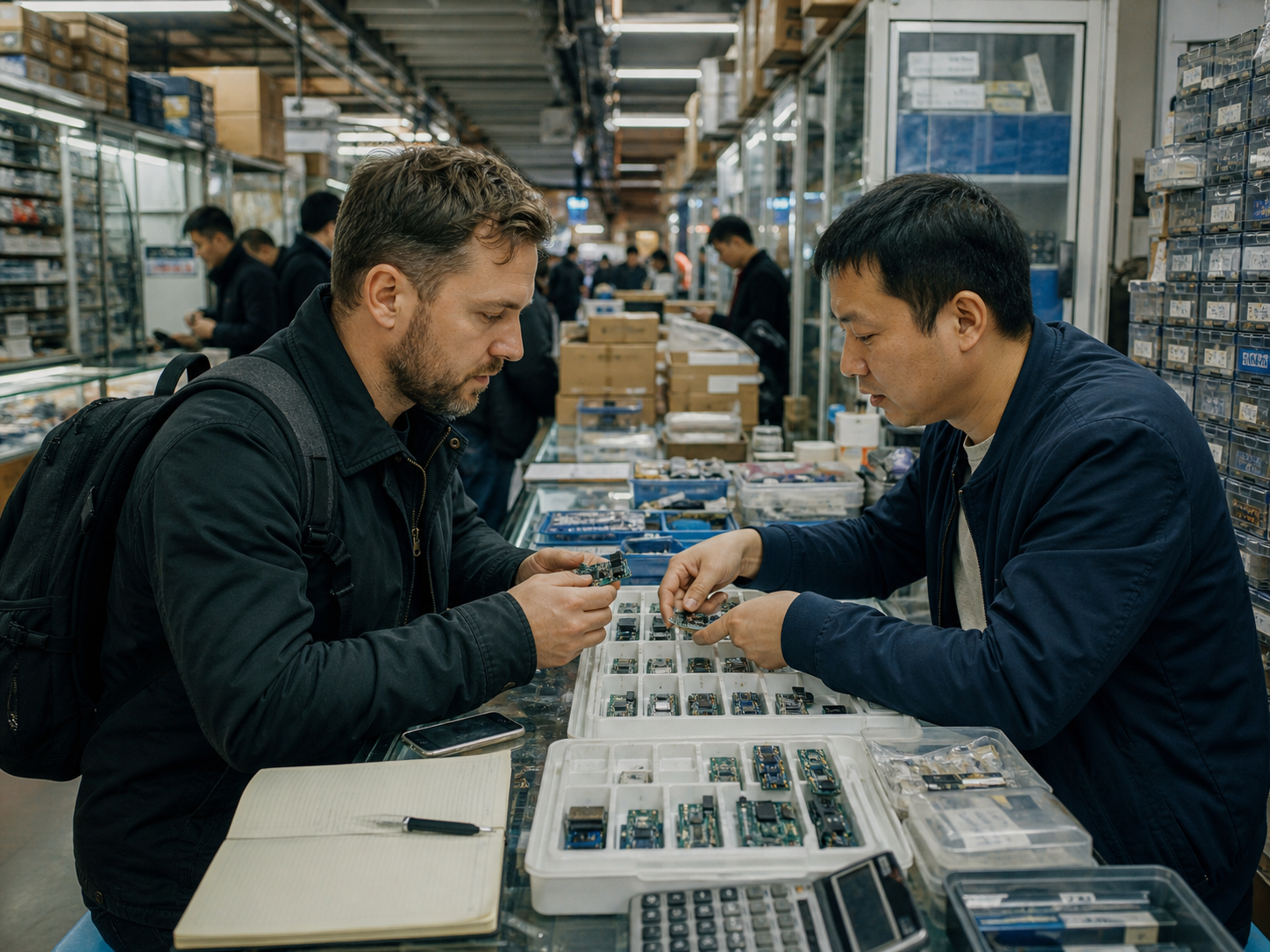
Soft goods (apparel, bags, packs, soft accessories) are sourced from the Guangzhou-Humen-Dongguan triangle. Guangzhou’s Zhongda fabric market is the largest concentrated fabric wholesale market in the world, with thousands of mills represented across multi-storey buildings. Humen is the dominant apparel cluster, with cut-and-sew factories ranging from small workshops to vertically integrated giants. Dongguan covers technical soft goods: backpacks, technical bags, performance apparel, soft cases. Together they give a hardware founder building soft accessories or apparel-adjacent products direct access to the supply chain that runs production for most international brands.
What this covers
Textile-based soft goods: woven and knit apparel, cut-and-sew and seamless construction, performance fabrics (technical synthetics, fleeces, ripstops), bags and packs, soft cases, soft accessories (straps, sleeves, pouches), and the underlying fabric, dye, print, and trim supply chain. It does not cover leather goods (a separate cluster in Heshan and Guangzhou), footwear (Fujian and Wenzhou clusters), or rigid luggage (a separate supplier base).
What the Pearl River Delta does well
Fabric breadth at Zhongda. Every major fibre, weight, and construction is available, often with stock yardage for immediate sampling. Custom-dye and custom-construction options scale into multi-thousand-metre runs.
Cut-and-sew depth at Humen. Hundreds of factories, from 20-machine workshops to 500-machine operations, with full capability for woven, knit, and mixed construction.
Technical soft goods in Dongguan. Bags, packs, and technical apparel factories with expertise in ripstop nylon, Cordura, TPU laminates, ultrasonic welding, RF welding, and waterproof construction.
Print and decoration ecosystem. Screen print, sublimation, embroidery, heat-transfer, reactive dye, pigment print, all available on short lead times.
Trim and hardware suppliers. Zippers (YKK and good-quality Chinese alternatives), buckles, sliders, snaps, webbing, elastic, thread, and labels are all sourced within a 30km radius.
Sub-categories
| Sub-category | Examples | Cluster |
|---|---|---|
| Cotton apparel (woven) | Shirts, denim, woven jackets | Humen + Dongguan |
| Cotton apparel (knit) | T-shirts, hoodies, polos | Humen |
| Performance apparel | Activewear, running, cycling, base layers | Dongguan technical clusters |
| Outerwear | Soft shells, hard shells, insulated jackets | Dongguan + neighbouring Fujian |
| Bags & packs (everyday) | Backpacks, totes, slings | Dongguan |
| Bags & packs (technical) | Hiking, photo, technical loadout | Dongguan specialists |
| Soft cases & sleeves | Laptop sleeves, camera bags, instrument cases | Dongguan |
| Soft accessories | Straps, harnesses, pouches, lanyards | Dongguan + Humen |
| Seamless apparel | Activewear, intimates, base layers | Specialist mills (Shantou + select PRD) |
| Fabric mills (sourcing only) | Woven, knit, performance | Guangzhou Zhongda + nationwide |
| Trim suppliers | Zippers, buckles, hardware, thread | Pearl River Delta + Yiwu national supplier |
MOQs and lead times
| Item | MOQ (per colour, per size) | MOQ (total) | Lead time |
|---|---|---|---|
| Cut-and-sew basic tee | 100–300 | 500–1,000 | 30–45 days |
| Cut-and-sew premium tee (custom fabric) | 200–500 | 1,000–2,000 | 45–60 days |
| Cut-and-sew hoodie / sweatshirt | 200–500 | 1,000–2,000 | 40–60 days |
| Cut-and-sew woven shirt | 100–300 | 500–1,500 | 45–60 days |
| Performance jacket (technical fabric) | 200–500 | 1,000–3,000 | 60–80 days |
| Seamless garment | 500–1,000 | 1,500–3,000 | 60–90 days |
| Everyday backpack | 100–300 | 500–1,500 | 45–60 days |
| Technical pack (ripstop, multi-panel) | 200–500 | 1,000–2,500 | 60–80 days |
| Soft case / sleeve | 100–300 | 500–1,500 | 35–50 days |
| Soft accessory (strap, pouch) | 200–500 | 500–2,000 | 30–45 days |
| Custom-dyed fabric yardage | n/a | 100–300m per colour | +10–20 days on garment LT |
| Custom-knit fabric | n/a | 500–1,500m per construction | +20–30 days |
| Embroidery setup | n/a | n/a | +5–10 days |
| Screen print setup | n/a | n/a | +3–7 days |
| Sublimation setup | n/a | n/a | +3–5 days |
Price bands
All prices at the stated quantity, ex-works Pearl River Delta, May 2026. USD conversions at ¥7.2.
| Item | 500 units | 2,000 units | 10,000 units |
|---|---|---|---|
| Basic cotton tee (180gsm jersey) | ¥25–45 (USD 3.47–6.25) | ¥18–32 (USD 2.50–4.45) | ¥14–25 (USD 1.94–3.47) |
| Premium cotton tee (combed, heavy) | ¥45–75 (USD 6.25–10.40) | ¥32–55 (USD 4.45–7.65) | ¥25–42 (USD 3.47–5.83) |
| Cotton hoodie / sweatshirt | ¥75–140 (USD 10.40–19.45) | ¥55–110 (USD 7.65–15.30) | ¥42–85 (USD 5.83–11.80) |
| Woven shirt (oxford / poplin) | ¥60–110 (USD 8.33–15.30) | ¥45–85 (USD 6.25–11.80) | ¥35–65 (USD 4.86–9.03) |
| Performance jacket (3-layer shell) | ¥220–450 (USD 30.60–62.50) | ¥160–340 (USD 22.20–47.20) | ¥120–260 (USD 16.70–36.10) |
| Activewear top (performance knit) | ¥65–120 (USD 9.03–16.70) | ¥48–95 (USD 6.67–13.20) | ¥38–75 (USD 5.28–10.40) |
| Everyday backpack (20L) | ¥85–180 (USD 11.80–25) | ¥65–140 (USD 9.03–19.45) | ¥50–110 (USD 6.94–15.30) |
| Technical pack (40L) | ¥260–550 (USD 36.10–76.40) | ¥180–420 (USD 25–58.30) | ¥140–320 (USD 19.45–44.45) |
| Laptop sleeve (15”, padded) | ¥35–75 (USD 4.86–10.40) | ¥25–55 (USD 3.47–7.65) | ¥18–42 (USD 2.50–5.83) |
| Custom-dyed fabric yardage (cotton jersey) | ¥22–40 per metre | ¥18–32 per metre | ¥15–25 per metre |
| Custom-knit performance fabric | ¥45–95 per metre | ¥35–75 per metre | ¥28–55 per metre |
| Embroidery (5,000 stitch) | +¥3–8 per piece | +¥2.50–6 | +¥2–4.50 |
| Screen print (1 colour, A4 area) | +¥2–5 per piece | +¥1.50–3.50 | +¥1–2.50 |
| Sublimation (all-over) | +¥8–18 per piece | +¥6–14 | +¥4.50–10 |
Specs to lock down
- Fabric: mill, reference number, weight in gsm, construction (jersey, twill, ripstop, etc.), fibre composition with named percentages
- Dye method: reactive, disperse, pigment, garment-dyed; colour-fastness rating
- Colour: Pantone reference plus physical lab dip (dyed swatch in actual fabric)
- Trims: zipper brand and spec, buckle spec, snap spec, elastic spec, thread brand
- Construction details: stitch type and SPI (stitches per inch), seam allowance, taping or binding, lining
- Pattern grading: which sizes, what grade rule, fit reference garment if available
- Print or embroidery: artwork file, placement spec, technique, colour count, durability requirement
- Label and care: brand label, size label, care label with care symbols (per ISO 3758)
- Packing: per-piece poly bag, folded or hung, master carton spec
- Test requirements: colour-fastness, rub-fastness, shrinkage, pilling, fibre composition, restricted substances
Process
- Tech pack: detailed spec sheet with sketches, measurements, fabric/trim spec, construction notes.
- Fabric and trim sourcing, typically Guangzhou Zhongda or factory-stocked materials.
- First sample (proto): typically free or low cost; the first iteration usually has notable issues.
- Sample iteration: 2–4 cycles to dial in fit, construction, materials, and finishes.
- Pre-production sample (PPS): production-spec materials, production-spec construction, made on the production line. Customer signs this as the standard for bulk.
- Bulk fabric production (if custom-dyed or custom-knit): 10–30 days.
- Bulk cutting and sewing: 15–30 days.
- Printing, embroidery, or other decoration as part of the production flow.
- Quality inspection per AQL plan, packing, master carton load-out.
- Pre-shipment inspection by you or a third party (¥3,000–8,000 for a third-party inspection in Pearl River Delta).
QC specifics
- Fabric inspection: 4-point system for visual defects (knots, slubs, holes, dye marks), weight verification (gsm measurement), shrinkage test (wash and measure).
- Colour-fastness testing (to washing, rubbing, light, perspiration), typically AATCC or ISO standards; spec rating 4 minimum on the 1–5 scale.
- Construction inspection per AQL 2.5 typical: stitch quality, seam strength (pull test on critical seams), measurements vs tech pack within ±1cm (varies by size).
- Print and embroidery quality: registration, density, hand-feel, durability (50 wash cycle test on samples).
- Trim function: zippers cycled 1,000 times, snaps and buckles tested for engagement and release force.
- Final pack: correct quantity per carton, correct mix of sizes, intact poly bags, accurate labelling.
What goes wrong
- Fabric substitution mid-production. Mitigation: lock mill and reference in writing; demand mill labels on bulk fabric; bulk fabric verification before cutting starts.
- Colour drift between dye lots. Mitigation: lab dip approval per colour before bulk dye; tolerance ±2 dE under D65; reject batches exceeding tolerance.
- Shrinkage exceeds spec. Mitigation: pre-wash testing on bulk fabric before cutting; spec pre-shrunk fabric for cotton products; adjust patterns for expected shrinkage.
- Measurements drift across the size range. Mitigation: graded measurement chart in tech pack; QC measures a sample of every size, not just the middle; tolerance ±1cm at chest/hip.
- Trim quality drops (zippers fail, snaps pop). Mitigation: lock trim brand and spec; incoming trim inspection; cycle-test on samples (1,000 zip cycles, 500 snap cycles).
- Print or embroidery quality inconsistent. Mitigation: approved golden sample; AQL inspection on production; durability test (50 washes) on samples.
- Restricted substances fail third-party test. Mitigation: REACH / Prop 65 / CPSIA testing pre-shipment; pre-qualify mills and trim suppliers for compliance.
Certifications
- OEKO-TEX Standard 100: restricted substances in textiles, widely recognised by retailers. ¥3,000–8,000 per fabric.
- GRS (Global Recycled Standard): for recycled-content fabric claims; required by many brands for sustainability claims.
- GOTS (Global Organic Textile Standard): for organic cotton claims.
- Bluesign: restricted substances and sustainable production, common for performance apparel.
- REACH / CPSIA: restricted substances for EU and US children’s products.
- Prop 65 (California): broad chemical disclosure for products sold in California.
- CPSC flammability: for sleepwear and children’s apparel sold in the US.
- WRAP / SA8000: social compliance, required by many retailers for vendor approval.
- Higg Index / FEM: environmental footprint reporting, increasingly required.
Trade shows
- Canton Fair Phase 3 (April, October): textiles, garments, and consumer goods; deep coverage of soft goods suppliers.
- Intertextile Shanghai (March, August): fabric and apparel sourcing.
- Yarn Expo / Spinexpo Shanghai (March, August): upstream fibre and yarn.
- CHIC China International Fashion Fair (Shanghai, March, August): apparel-focused.
- Bag and Luggage Expo (Guangzhou) (March, September): bags and soft cases specifically.
- Asia Outdoor (Nanjing) (summer): technical outdoor apparel and packs.
- ISPO Shanghai (summer): performance and outdoor; useful for technical fabric sourcing.
When to use us
Soft goods have more silent failure modes than electronics: fabric substitution, colour drift, measurement creep across size grading. They surface after bulk shipment unless you catch them at PPS or pre-shipment inspection. The sourcing desk handles tech-pack review, mill shortlisting, sample coordination, and pre-shipment inspection management remotely. The hardware founder tour is the in-person version: walk Guangzhou Zhongda for fabric, visit Humen sewing lines, and see technical-bag factories in Dongguan first-hand.
Last reviewed: 23 May 2026.
Frequently asked questions
Woven vs knit, what's the difference and when do I use each?
Woven fabrics (twill, canvas, denim, ripstop, oxford) are made on a loom with interlaced warp and weft yarns. They are strong, stable, low-stretch, and structured. Use for shirts, jackets, bags, and technical gear. Knit fabrics (jersey, interlock, fleece, French terry) are made on a knitting machine with looped yarns. They are stretchy, soft, and breathable. Use for t-shirts, hoodies, athleisure, and anything that needs to drape or stretch. Most soft-goods products use both, for example a woven shell with knit collar and cuffs on a jacket.
What does 'cut-and-sew' mean, and when should I use seamless instead?
Cut-and-sew is the standard apparel construction method: a roll of fabric is cut to pattern pieces, then sewn together. It is flexible, low capital, has a broad supplier base, and MOQs go as low as 300 units per style. Seamless construction uses a circular knit machine to produce the garment as a single tube, with no side seams, less material waste, and often more comfort for activewear and intimate apparel. Seamless has higher MOQs (typically 1,000+ per style) and longer lead times (10–14 weeks vs 6–8 weeks for cut-and-sew). Use cut-and-sew for almost everything; use seamless when comfort or aesthetic specifically demands it.
How do I avoid fabric substitution between sample and bulk?
Lock the fabric mill in writing. Name the mill, the fabric reference number, the weight (gsm), the construction (e.g., '210gsm 100% combed cotton single jersey'), and the dye method. Require physical fabric swatches from the actual bulk fabric before production cuts, with mill labels intact. For high-stakes products, send fabric samples to a third-party lab for composition verification (¥800–2,500 per test). Most fabric substitution happens because the spec was vague ('soft cotton jersey') or the mill ran short and the factory substituted without telling you.
What's the difference between reactive and disperse dye, and why does it matter?
Reactive dye is used on natural fibres (cotton, linen, wool). The dye chemically bonds to the fibre, giving good colour-fastness to washing and rubbing. Disperse dye is used on synthetic fibres (polyester, nylon), applied under heat and pressure, and is less colour-fast under prolonged sunlight without UV stabilisation. For cotton garments, reactive is standard. For polyester performance wear, disperse is standard, but spec UV-stable disperse if the product sees outdoor use. Pigment printing is a third option: lower cost, less colour-fast, used for screen-printed graphics on top of a dyed base.
How do MOQs work when I have multiple colours and sizes?
MOQ usually applies per colour and per size combination, not per total order. A factory might have a 1,000-unit total MOQ but require a minimum of 300 units per colour and 50 units per size. So if you want 5 colours and 5 sizes, you are looking at 1,500 units minimum (5 colours × 300 units) distributed across the size range. Plan your colour and size mix before quoting; reducing colour count is often the easiest way to hit MOQ targets on early production. Custom-dyed yardage (vs piece-dyed garments) has additional dye-lot minimums of 100–300m per colour.
What's the realistic lead time from approved sample to delivered bulk?
For a moderately complex garment using stock fabric and standard trims: 30–45 days from approved pre-production sample. For custom-dyed fabric or technical performance fabrics: 50–70 days, because dye and fabric production sit on the critical path. For seamless construction or jacquard knits: 60–90 days. Build samples first (4–8 weeks for first samples), iterate to a pre-production sample (2–4 weeks for revisions), then bulk. Total concept-to-delivered-bulk runs 4–6 months for a first production run.